

Virtue: noun, Behavior showing high moral standards
A quality considered morally good or desirable in a person; A good or useful quality of a thing; A conformity to a standard of right; A capacity to act
Phrases “by virtue of” “through the force of,” “in virtue of” “by authority of”
The hockey world is notorious for projecting, identifying, classifying, labelling, comparing and defining those that play the game professionally. Every aspect of a player’s identity, character and skill set is scrutinized and defined in order to understand and identify a player’s true value. Terry Virtue took the road less travelled to accomplish his hockey dreams. Unconventional inroads in the game are often the most rewarding, but incredibly complex to define. By virtue of hard work, resiliency, persistence, perseverance, dedication and an unrelentless drive Terry Virtue reached hockey’s highest level, it was his journey to that point that truly defined his character as a player and person.
A Way of Life
From the grassroots of the game, to the Western Hockey League, the ECHL, the American Hockey League and the National Hockey League, the Scarborough, Ontario product experienced it all when it comes to the game of hockey and life during Terry Virtue’s 16-year professional career. Virtue’s earliest recollection of the game of hockey was being put on the ice for warmup as a mascot for his brothers’ team at the tender age of three years old. “My father coached my older brother’s team, I remember getting dressed in my gear and going out there for warmup and skating around with the team,” said a reflective Virtue.
“I wasn’t the greatest skater back then compared to my two brothers, they were a lot better than I was, they were skilled, top scorers of the league or any league that they played in,” added Virtue.
Virtue’s introduction to the game not only hooked him, it inspired him. The passion to play and learn all of the game’s subtle nuances became very intriguing. Following his brothers’ footsteps became natural. Brotherly love takes on an entirely different meaning when it comes to the game of hockey. Competition between brothers can be bitterly fierce, nevertheless, it can provide unmatched inspiration and motivation, especially for the runt of the family.
“I always looked up to them, they were good little players, they were small, but they were better players’ than I was.”
The game of hockey has drastically changed throughout the decades. Small skilled players in that era of the game were ruthlessly challenged. Like so many other young Canadians, Virtue learned the game in the harsh elements of southern Ontario winters. From frozen feet and hands, to red numb windchilled cheeks, Virtue fell in love with the game almost instantly.
When Virtue was four years old the family moved to Edmonton. “Alberta’s market was starting to move, and my dad needed work so that’s when and why we moved.”
“When we got to Edmonton, we were on the ice 24/7,” recalled Virtue.
The daily itinerary for the Virtue family revolved around two things, school and hockey, everything else was secondary. “We got out of school at 3:30, on the ice, home for dinner at 5 o’clock and then right back out to the rink, we did that on a daily basis.”
The frigid weather and bone chilling cold was never a deterrent. “I don’t remember us being cold out there playing, it was just one of those things. When you’re out there having fun, I’m sure our feet were a little bit cold, but you didn’t worry about it.”
“We were just out there every day, minus 30 or colder it didn’t matter.”
“We wouldn’t have school on certain days because it was too cold, but we would be out on the rink, that was just the way it was. That’s where we really enjoyed the game and that’s where we got the skill from,” stressed Virtue.
“I don’t think there’s enough of that anymore,” said the longtime pro.
Every player needs a mentor. Every player needs someone that they can trust and bounce ideas off of. The mentor strives to educate and develop their student’s to be the best. Terry Virtue had those mentors built in within his family unit, especially when it came to his father’s impact.
“I had some great coaches coming up through, but realistically it wasn’t until my dad started coaching me that’s when I really took a big step forward.”
Hockey was a way of life for Terry Virtue, but some of the most important life lessons are learned the hard way.
The Turning Point
Some people want to forget or ignore their turning point or fork in the road. With so much entitlement in the game today, young players and their families alike are quick to lay blame. Terry Virtue remembers the turning point of his career like it was yesterday.
“I was the 5th or 6th defencemen on every team I ever played for until around 15 or so. I came back from summer, and I could just out skate everyone at that point.”
“I was lucky to make the best teams, I would get cut, I always worried about stuff outside of the game, if the Refs were bad I’d be yelling and screaming at them, so when my dad started coaching me, which just so happened to be the same year I got this skating stride that was so better than everyone else’s, again I don’t remember going to any hockey schools or anything like that, I grew, and lost some weight I guess.”
“We weren’t a good team, we lost our best player and all of sudden we went up a level, we weren’t very good, nobody wanted to coach us. We needed a coach, so that’s when my dad took over. I still remember my dad saying, ‘you asked me to coach the team because you needed a coach.’
It didn’t take too long for the coach to set the tone. There was no preferential treatment when it came to the “coaches’ son” on that team. “So, there we are, one of the first games of the season and I started to run my mouth.”
“My dad came down the bench and said, ‘if you do that again and continue embarrassing me, I’m going to take your skates and throw them in the river.’”
“From that day on I started to focus more on hockey and not all of the other outside stuff, that was really the point where I took a big step ahead of everyone else, that was definitely the turning point,” confessed Virtue.
Family, Team and Unity
Ask anyone in the hockey world about Terry Virtue and “team guy” is the first thing they will all utter. Terry Virtue, was always there for his teammates, they were his second family. Virtue learned just how important support and unity was at a very young age.
“When I was 9 going on 10 my parents went through a divorce, and they couldn’t always be at the hockey games.”
Life isn’t always easy, but Virtue learned another life lesson that shaped his character as a player and person during that time, unity. “Lorne my best friend, Joe and Sharon Hadley were always there for me, they would be at every hockey game and practice they would pick me up, they were a family to me, they are like my second mom and dad, I still call them to this today, they were always there for me, that was another turning point for me,” said Virtue.
The Hadley’s lifted their son’s friend and teammate up when he needed it the most both on and off the ice. At 10 years old Terry Virtue learned that no matter what, support and unity is everything when it comes to the game of hockey and life. Teammates were like family, and everyone needs to be supported. “Years later Mr. Hadley came to watch me play against the Manitoba Moose, “I told him after that game, that I wouldn’t be here if it wasn’t for him and their family,” said an emotional Virtue.
“The Hadley’s were always there for me and that’s something I will never ever forget.”
Tough Love, the Next Level and Proving You Belong
It’s often said that our experiences shape and define us. Tough love from a parent and coach feels like hell or torture in the moment, until we realize that they always have or had our best intentions in mind. From turning point to a big break, proving you belong and can excel at the next level isn’t always seamless. Terry Virtue has taken advantage of every opportunity that has ever come his way. Nowadays a player’s draft year is often said to be the most stressful year of their careers. In the WHL, it’s all about the “Bantam Draft” but things were vastly different then.
“Ironically there was no Bantam draft back then, players just got listed, there was Hockey Canada Camps and it was up to my dad and coach to determine which players to send and he didn’t send me,” said Virtue.
‘I’m not sending you,’ he told me straight out.”
“He didn’t want to deal with all the bullshit from the parents,” said Virtue.
Tough love or just plain tough, Coach Virtue didn’t want politics to play a factor. “He sent the other kids, I still remember one of the other dad’s went up to him and asked, “Why didn’t you send Terry,?”
‘Because I didn’t want to deal with the bullshit.’
“Back then it was always politics, politics, and my dad didn’t want to be that guy. He will still say to this day, that he should have sent me to that camp, but that kind of kept me off the radar,” said Virtue.
Things always happen for a reason, his father’s decision kept Virtue hungry and craving for an opportunity. Virtue would play one more season of minor hockey at the Midget level before making the jump to junior. “Francis Maltais was my coach that year in Midget and he was a great coach, he coached my brothers as well, he was a great guy and helped me a lot,” said Virtue.
The dream to play professional hockey was as obscure as Virtue’s trajectory in the game. “To be honest at that point, I enjoyed the game, I had fun with it, but I never really thought of it that way, said Virtue when asked if he had any inkling on playing pro.
“I never really thought about playing college hockey, I just thought about getting to the next level.”
“At the time, I told myself I’ll go to the Western League if I can get there.”
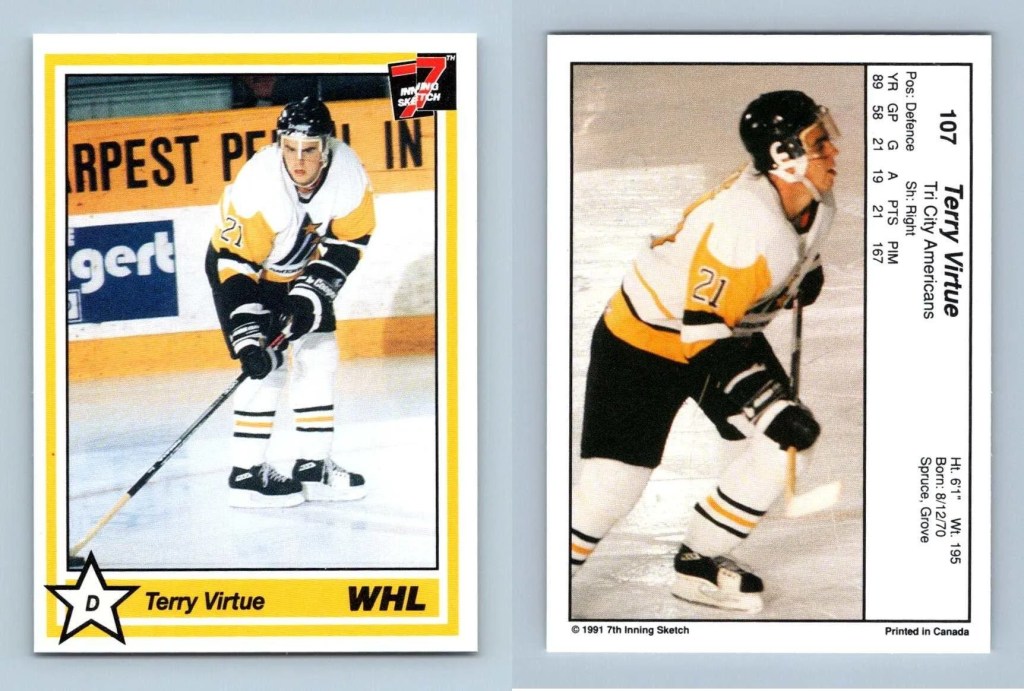
The “Wild West” or the Western Hockey League was wild to say the least back then. Opportunities in that era of the game and league being an undrafted, undersized defensemen weren’t easy to come by. Virtue was accustomed to the unconventional path to the next level, he just had to continue to prove the critics wrong or continue to prove people right. One supporter of Virtue was none other than Victoria Cougars General Manager Al Patterson.
“Once I got to Tier II, I competed hard and had some skill, everyone saw that,” said Virtue.
“As a kid I still remember going to a Calgary Wranglers game, obviously at the time, I never understood how good the level of hockey was or the impact of the game.”
“Al came to watch me play during that time in Tier II, he was the guy that really wanted me to come play. I will never forget Al Patterson telling me that I belong in the WHL and could be an impact player at that level,” said Virtue.
Patterson may have been responsible for Virtue’s introduction to the WHL, but things don’t always go to plan. “I put up some good numbers there at the end of the year. The following year didn’t go as smooth as I wanted, but that’s how it goes and how I went,” said Virtue.
Virtue has never taken an opportunity for granted and has always been motivated to prove people right and wrong throughout his entire career. “I had nothing to lose, go play and have fun, I mean that first year I went to Kamloops and was the last guy that got cut there, they still didn’t keep me listed.”
“I actually started school in Kamloops that year but went back to Hobbema.
“When I got to Victoria that same year we played Kamloops in the 1st round of the playoffs, we lost that series, but by that time I was playing top four minutes for Victoria in the series.”
“Everyone asks me why I ended up playing sixteen years, I would say it has a lot to do with that, proving people right and wrong. It was my competitive nature and willingness to do whatever I could to stay where I was.”
The WHL to the Pros
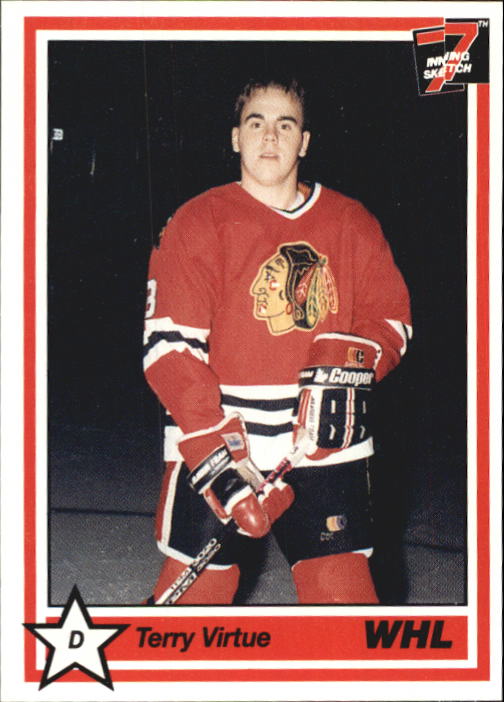
Cracking a professional roster in the early 90’s as an undrafted undersized free agent defenceman was almost impossible. “My last year in Major Junior I had a really good year, a lot of teams in the BC junior league were offering me a lot of money to go play, a lot of those teams would call me every week.”
“It got to the point where it was like, No, I’m having a great year and let’s see where that’s goes, I didn’t know if I was going to get a pro contract or not,” confessed Virtue.
At one point it looked like Virtue was on his way to Spokane for a major run at championship glory, but that didn’t work out. “There was a rumour circulating that I was going to get traded to the Chiefs, but they brought in a few other guys.” The Chiefs went on that season to hoist junior hockey’s Holy Grail, the Memorial Cup.
After that year I had a few offers from CIAU teams which is now known as USports or Canadian University. I wasn’t much of a school guy, I wasn’t thinking about school, it wasn’t on my radar.” Virtue found himself at a crossroads, something that he was very familiar with given his nonlinear path in the game. “That summer I had nothing going on. The ECHL put on a free agent tryout or combine in Edmonton.”
“There were a lot of good players in the Western league that attended that tryout, obviously they were in the same situation I was in.”
Virtue caught the attention of some ECHL teams one in particular, Greensboro. “They offered me a tryout; Kelly Brubaker was the coach.”
“I get there and realize that all of these guys in Greensboro were on the team the prior year before and all under contract.”
“I was like what are you doing, Terry”?
“Me and Craig Pankwicz both got cut from that team on the same day who also went on to play a bit in the NHL. He went on to Knoxville and I went to Roanoke, Virginia.”
“I drove all of the way out there, and I still remember my dad asking me, what are you going to do now?”
From Scarborough to Edmonton to Victoria, to Tri-City, to Portland, to Virginia, that’s Terry Virtue’s path to professional hockey. Every step of the way he had to prove that he belonged and prove he had value and that’s exactly what he did. “Ironically, my first professional game which was an exhibition game, was against Greensboro, I get into a fight with Todd Gordon, one of my brother’s best friends from home, seven minutes into the game and we both got kicked out.”
“There we were sitting in the stands together. We sat there watching fight after fight, after fight.”
“I called my dad when I got back to the hotel that night and said I’m not sure if I want to do this.”
“I don’t mind fighting, but I don’t know if I’m ready to do this.”
“The next day we are heading into Johnstown, and our coach Roy Sumner was suspended so my defence partner Bill Whitfield was coaching us, I was like are we in Slap Shot or what?, but there was only a couple of fights that game, so other game was just a one off, well it wasn’t just a one off, you had to be ready game in game out in that league.”
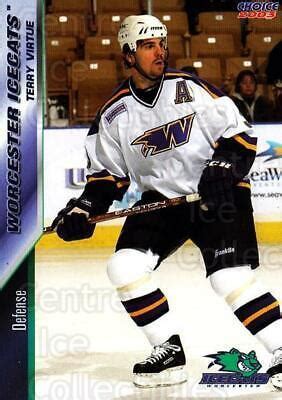
Baptism by fire, that’s what Terry Virtue experienced in the ECHL. The places that Virtue saw and experienced, the American Hockey League and National Hockey League must have seemed so far away, but yet so close.
“When you’re in Roanoke making $250 a week, and back then you paid your own rent, there were four of us in a three-bedroom apartment sharing rent, it was a bunch of guys from the Western league, we had fun, but it was a grind,” Virtue said.
Virtue endured that league and grind for almost three years at the start of his career. “I wasn’t sure if I was going to go back after my second year.”
Virtue had a few friends from home suggest he go back to school do one year at NAIT and then they would hire him to work in the oilfields. The grind and his journey in the game would have ended right then and there. “My agent called me a short time after that saying the Oilers wanted me to go to camp.”
As the great Jacques Demers always said, “When the door of opportunity opens, make sure you walk through, because you never know when the door will slam shut.” Terry Virtue was born for those kinds of opportunities. “I had nothing to lose, and looking back on it now, I wasn’t really ready, it was like a week before camp started or something like that, but it was one of those things like, ok, I’ll go, it’s Edmonton, it’s my hometown and I ended up having a great camp.”
Virtue will never forget the late great Ted Green coming up to him providing some positive feedback and reinforcement.
The rugged two-way defender earned tons of respect from the organization during that brief, but memorable stint at camp. Virtue was sent to Cape Breton and signed his first contract at the American Hockey League level. He also spent some time with the Wheeling Thunderbirds of the ECHL that season as well. “Dave Andrews called me into his office in Cape and said, just to let you know, you shouldn’t be going anywhere, there are guys here that you’re better than, but Glen Sather wants to give some guys another chance,” Virtue recalls, the guy was Link Gaetz.
Virtue put the time in Wheeling and got the call to return to the Cape halfway through the season. He was leading the team in scoring, despite having a broken jaw and kept playing through that, realized that Cape Breton was short on players, he started asking what more did he have to do to get a chance at the AHL level?
Virtue learned those lessons the hard way, but always knew the opportunity would come his way when the time was right. “Terry was a very determined individual in terms of his commitment to paying whatever dues were necessary to advance his pro career,” said former President of the Cape Breton Oilers and the American Hockey League Dave Andrews.
“Terry worked his way up the ladder from the bottom as an undersized defenseman. He had tremendous skills, toughness, and was a great teammate. I always appreciated his drive and his commitment to be the best that he could be on and off the ice.”
Virtue’s confidence and resiliency never wavered, deep down he had always embraced the grind that was minor pro hockey, his unconventional path in the game and his journey taught him to stay and live in the moment no matter what.
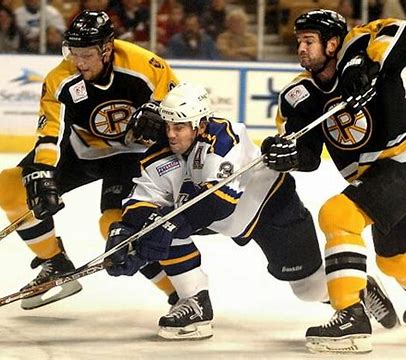
A Lifelong Friendship On and Off the Ice
Shared goals, dreams and aspirations. There’s nothing quite like having a best friend for a teammate. The game of hockey has a way of connecting people like no other sport. Stu Barnes and Terry Virtue’s bond and friendship started in elementary school and has stood the test of time.
“We were really great friends, best friends all the way through, from elementary school to high school and beyond. We have a great history of playing together and have known each other for a long, long time,” said Barnes. Barnes like no other witnessed the sacrifice, hardship and turmoil Virtue experienced during his ascension in the game and life.
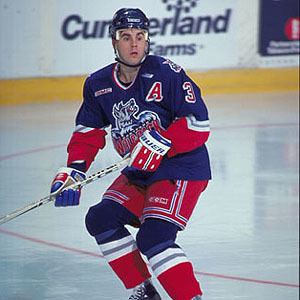
“Terry never had it easy.”
“He had to earn everything that he got within the game.”
“What I admire and respect about him so much is how hard he continued to compete and battle. He has earned everything over the years within the game,” said Barnes.
Virtue’s exploits as a player were sometimes overlooked and unappreciated during that era of the game. “Terry was a very good player, he was an underrated player who skated extremely well and was smart. He possessed great puck skills and was obviously a tough physical guy and he took advantage of every opportunity that ever came his way.”
“If anyone ever left the door ajar, he got his foot in there and took advantage of it, earned and maximized those opportunities at every level.”
“I have so much respect for Terry for what he did from a career perspective within the game. He did everything he could which was awesome to see him have so much success,” said Barnes.
We hear the stories around the sporting world about athletes who were “before their time.” One could say the same about Terry Virtue and how he played the game. “Terry’s ability to skate and move pucks definitely would have fit today’s game more than it probably did way back years ago when we were playing. Everyone adjusts and plays to their strengths, Terry was just a guy that could do it all, adapt and find a role and excel and have a lot of success.”
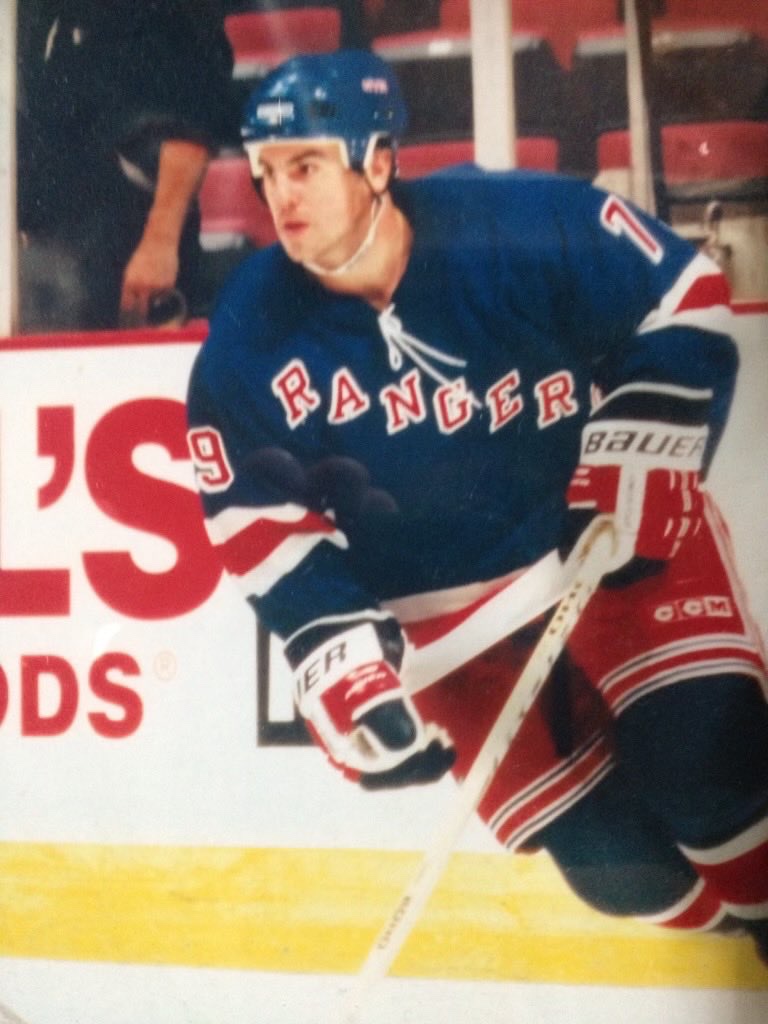
From elementary school and minor hockey to the bright lights of the National Hockey League, two young kids with a shared dream which came true. Barnes experienced the NHL at 20 years of age. He cut his teeth in the American Hockey League with the Moncton Hawks before becoming an NHL regular and playing over 1,252 NHL games. Longevity, work ethic and true professionals, that bond and characteristic was definitely shared between Virtue and Barnes. What did it mean to Barnes to see his best friend finally accomplish his dream to play in the National Hockey League? “I just remember as it was happening how excited I was for Terry and proud I was to be his friend.”
“I was so proud of him for everything that he had accomplished to get to that point, again he just took every opportunity that came his way as a challenge which motivated him. Terry played hard, did all of the right things and adapted,” said Barnes.
“When I first found out and knew that Terry got called up and was going to play, I was very very excited and just so proud of him and happy for him.”
Virtue’s time in the NHL may have been brief, but that never took away from the impact he had on and off the ice at the AHL and ECHL level. “I’ve known Terry for so long and I know what a great person and character individual he is, when you hear about what he did for teammates and the players association during his time there it doesn’t surprise me one bit, how much he was willing to give,” said Barnes.
“As much as Terry was trying to have success and move forward in his own career, he was also along the way helping teammates and other players as well.”
Terry Virtue was a team guy, “a glue guy” through and through within any dressing room or team at any level. Barnes who is a hockey lifer and the current Head Coach of the Tri-City Americans of the Western Hockey League knows the true value of having players like that as part of any organization.
“It’s huge, it’s why teams have success, why Terry had success over the years and why teams and organizations that he was on had so much success. When you have character individuals that care about the group, when you have a lot of “that” within the team or organization, you’re going to have a lot of success, Terry was always a huge part of that, he was always a guy that was team first and did whatever he could to lead, help out and assist others.”
“It’s hard to use the superlatives when describing what type of teammate Terry was.”
What was Barnes’ fondest memory of playing the game with his lifelong friend? “That’s a great question, I don’t know if there’s one thing that stands out, just a lot of memories of hockey games, and staying in touch and chatting with him over the years. Anyone that knows Terry really, really loves him and enjoys being around him.”
“Any time you’re around Terry Virtue, you always have a smile on your face because he’s such a great person,” said Barnes.
“Wasn’t Their Guy”
Terry Virtue’s climb in the professional ranks of the game wasn’t scripted. Blood, sweat, fights and tons of points categorized Virtue’s first few seasons at the ECHL and American Hockey League level. Fighting every inch of the way to earn an American Hockey League and National Hockey League contract to become “a regular” then “a veteran” provided stability and job security for Virtue. The politics of the game even at the highest level still exists especially when a player, “isn’t their guy.”
The foundation of Virtue’s professional career could be defined within a memorable four-year span. Right place, right time, or another opportunity well earned. “Well, that’s a good story,” Virtue said with a wry smile.
“Honestly, that part of my career is why I got to play in the NHL, and it’s really the entire base of my career in that four-year span,” said Virtue.
“I was in Worcester for four years; I was there before the “Larry Pleau Days” in St. Louis. I was there, because of Mike Keenan, Keenan signed me, I played the one year, and they thought I was going to be an NHL forward.”
“I might have had an opportunity to make the Blues as a forward, went to camp as a forward, but once Larry came on, Joel Quenneville became the Head Coach, you could kind of see the writing on the wall.”
Fourth line forwards were getting signed and roster spots were quickly getting filled up at the NHL level. “I played the first half of the year in the minors as a forward, I was thinking I had to score 20 goals, but they didn’t want me to score 20, they just wanted me to be rough and tough, it just wasn’t fitting in so I ended up playing D the last half of the year.”
Virtue closed out the season with a great performance on the backend but knew deep down things were about to change. “When the summer came around, they wanted to buy me out.”
“It had nothing to do with me, I just wasn’t their guy, they just didn’t know me well enough.”
While Virtue was experiencing that, his agent was trying to make something positive happen from a buyout perspective. Virtue received an unlikely phone call that changed his professional career and life. “Peter Laviolette called, I didn’t know if he knew, or someone had given him the heads up, he actually coached in Wheeling the year before, I had a house in Wheeling and he knew some of the same people in Wheeling, they might have given him my phone number, I don’t know.”
“Peter asked me what I was doing.”
“I told him about the buyout, so he got Boston to offer me something, and at the start it was quite far apart of what I was going to make with salary and buyout agreement.
“Peter told me, ‘what if we can make the number a little closer.’”
“I told him yeah that sounds good, so I ended up signing with them.”
“Peter went to bat for me, Pat Burns didn’t know me from a hole in the wall, I don’t think he even knew my name,” Virtue said.
“Peter kept saying and telling Pat that I could play, ‘he can play and will fight anybody, he will do anything you want and basically said that I was a “team guy” through and through.”
Laviolette knew what Virtue could do from playing and coaching against the gritty skilled two-way defender. Laviolette played and was assistant coach with the Providence Bruins. Worcester and Providence battles were very well documented in that era.
“I think we played Providence twelve times a year, so he definitely knew me,” Virtue said.
Black and Gold and Beyond
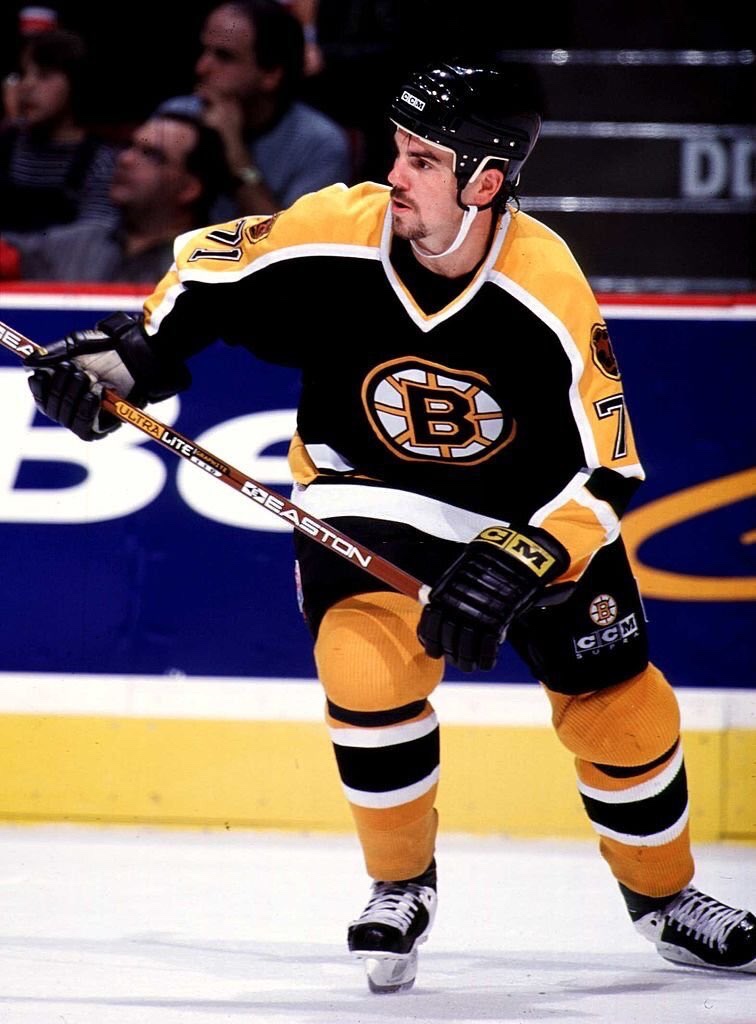
Virtue had landed a contract with an organization that knew his value and appreciated what he could bring to the table. Virtue’s time in the Boston Bruins organization was incredibly memorable. The Black and Gold suited Virtue’s style of play. “My first exhibition game with the B’s was in Montreal at the Forum, and I played a ton, there were a few young D men in the lineup and Burns benched them in exhibition season so basically I logged like 20-25 minutes that game, but after the game I looked at one of the guys and said I don’t think Burns even knows my name.”
“He kept saying, you go, you, you,” Virtue said laughing.
“So the next day we are in Chicago, and Hal Gill is my D partner, Burns knows I’ll fight anyone, so Hal goes off half way through a shift, so I stay out until the whistle blows, but I get in a pushing match in front of our net, so I skate back to the bench and Pat is like ‘no, no no you stay out there, get back out there.’”
Virtue found himself lined up against, Ryan VandenBussche, Dave Janssen and Bob Probert. “I was like I guess I know what Burns wants to see from me, so I fought Bob Probert.”
“I didn’t go down, it certainly didn’t look good, Virtue said of his fight with arguably one of the NHL’s all-time best fighters.
“Honestly, that’s probably the only reason I got to play in the NHL, because after that Pat was like, ‘hey Terry great job.’ “Pat Burns knew my name, as much as I only played four games, he was a first class human being that treated me right.”
“If you go from the buyout with Larry Pleau to all of that, I went to Providence and won a Calder Cup and was an All Star and did whatever, then Hartford or the Rangers organization signed me to a three contract, and won another Calder Cup, but who was the first team that called me four years later, the St. Louis Blues, Larry Pleau and John Ferguson Jr.,” Virtue said.
“To this day Larry and John are great friends of mine, they just didn’t know me, I understand the process now, but at the time going through that buyout hurt me and it lit a fire under me.”
“It circles around, you know, Larry and Fergy might not have known what they had at that time,” admitted Virtue.
“So, there I am at the Christmas party dinner with a cut over my nose, Larry and John were sitting with their wives’ and called me over to introduce me to them, ‘this is our “old school” guy, they said.”
“Old school guy,” “team guy” “glue guy” and a winner that epitomizes Terry Virtue’s entire career. “Terry wasn’t signed by the Bruins until late August, but what an addition he turned out to be,” said longtime hockey scribe and New England hockey historian Mark Divver.
“From Day 1, he was a critical part of Providence’s championship team. He was smart and physical, and his work ethic was second to none. To me, he came across as someone who thoroughly enjoyed playing the game. Terry had a career year offensively for Providence and he never hesitated to drop the gloves when that was called for.”
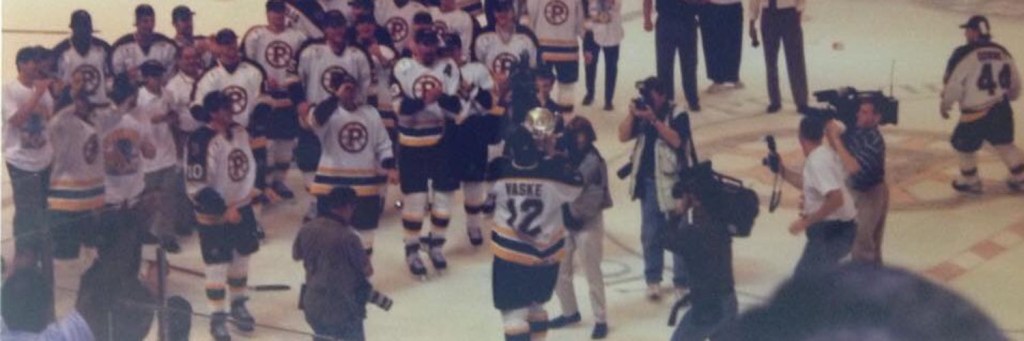
“He was a leader and a winner.”
“It’s too bad Terry didn’t get more of a chance in Boston,” said Divver.
You can look at all of Virtue’s numbers and stats over 16 years of pro which are staggering considering the style and era in which he played. One had to look beyond all of the numbers and stats to fully appreciate the impact Virtue has had on the game and all of the people involved within it over the years. Terry Virtue deserves more recognition for what he has accomplished in the game. If you ever spent time with Virtue, you would know in mere seconds that’s certainly not his style.
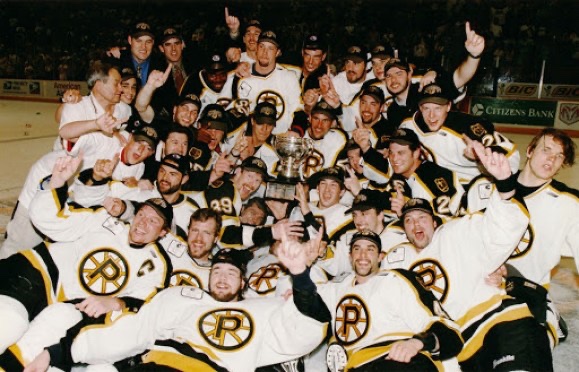
For Terry Virtue it was always about the team, always caring about those around him more than himself. Virtue has never craved the spotlight. Behind the confident demeanor lives a passion and competitive fire second to none. Virtue’s longevity and success in the game truly speaks for itself. Look beyond all of the success and championships, for Terry Virtue it’s always been about the people, his teammates and the team.
“He’s a great guy and teammate,” said 2023 American Hockey League Hall of Fame inductee and former teammate of Virtue’s Dennis Bonvie.
“Terry was a good skater, fight anyone and played tough. He was an undercover good player and full 200-foot defender, I have lots of time for Terry has a player and person,” said Bonvie.
Virtue never backed down on the ice, he never backed down off of the ice. Giving back to the game of hockey was second nature for Virtue. He coached major junior hockey for five years after his playing career winning an OHL championship. In retirement Virtue also spent countless hours developing young players in the Massachusetts area by providing skill development and coached high school hockey there as well. His son Braeden played four years in the QMJHL. Braeden is also giving back to the game now in Ottawa where he attends school and is a skill coach in the local community.
Virtue’s work with the PHPA (Professional Hockey Players Association) was critical and provided players with the support they needed and deserved. He was part of negotiating two collective bargaining agreements on behalf of the players in the AHL.
Virtue stood up for his teammates and what was right on the ice and in the boardroom. That type of integrity and character occasionally ruffles feathers especially on the business side of the hockey world.
You see playing the game the right way and standing up for what’s right was firmly entrenched in his DNA and were lessons he learned throughout his nonlinear pathway in the game. The ultimate team guy and straight shooter asked all of the tough questions during his time on the executive committee of the PHPA. The business side of the game is sometimes offside, but Virtue always had the best interest of the players in mind. Negotiations are never easy, but Virtue was part of those discussions during his ten plus years with the association.
“We did a lot of good things during that time,” Virtue said proudly.
Virtue would fight anyone as a player and go to bat for anyone. The division between teammate and opponent ended when it came to representing the best interests of every player within the association.
“Some believe the game owes Terry Virtue a lot, the game doesn’t owe me a lot, I owe the game a lot, I owe the game, because of all of the great friends I have and what I have right now,” said Virtue.
By the virtue of Terry Virtue’s path to the pros and beyond his next stop on that journey should be the American Hockey League Hall of Fame.


Fantastic story. I just met Terry briefly yesterday in the weight room at the city gym here in Gulf Shores, Alabama. He said he also lives here. I saw he was wearing an Avalanche T-shrit and asked him if the felt confident with the two M’s leading the team into the play-offs. I have been a huge hockey fan since the Flyers arrived in Philly back in ’67 and had never met somebody who played in the NHL before. He seemed really humble and surprised that I made a big deal of it. Reading this story about what a good man he is makes meeting someone who played the game ata that level more special. Life is such an adventure and full of wonderful surprisew every day. Hope to run into Terry again,
LikeLike